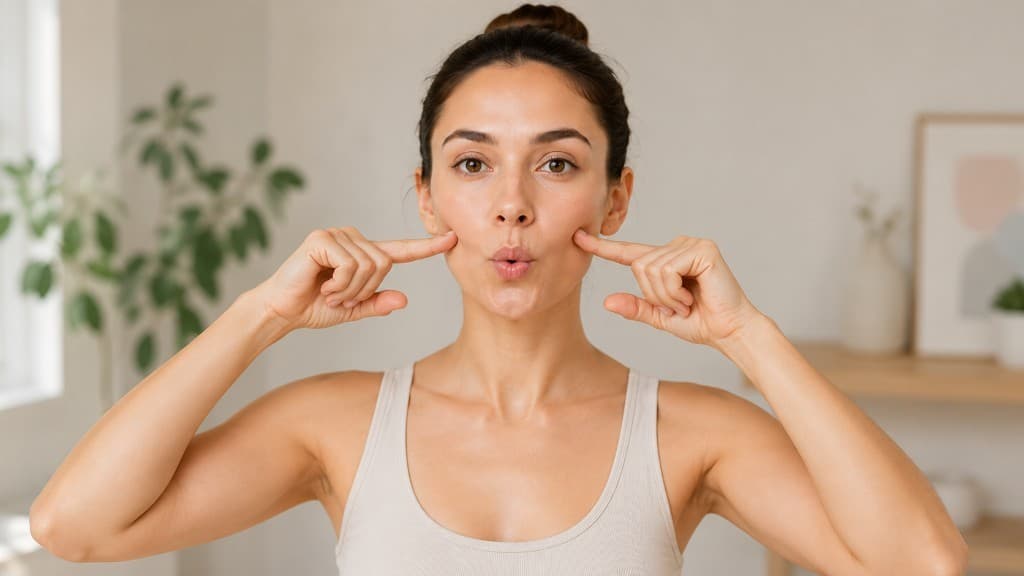
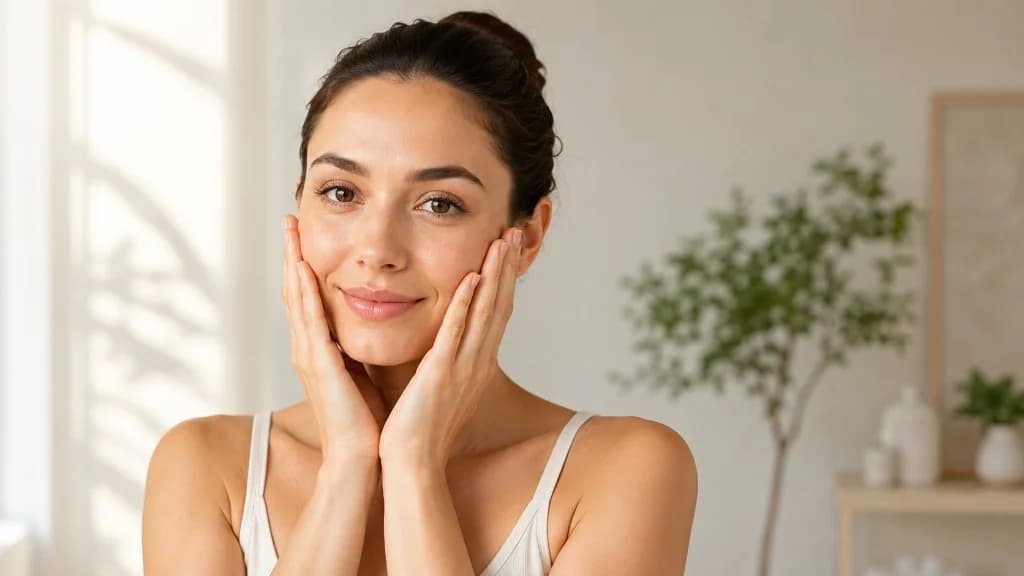
Face yoga is a practice of slow, controlled movements, breath awareness and gentle touch aimed at the muscles of the face, neck and jaw. You repeat small patterns—lifting the brows with care, softening the jaw, moving the cheeks without dragging the skin—to notice how you hold tension during ordinary life. It is not surgery, injectables or a promise to erase wrinkles overnight. Think of it as mindful movement that may support muscle awareness and a steady self-care ritual alongside cleansing, moisturizer and sun protection.
Many beginners arrive after seeing short routines online. A balanced starting point is a five-minute face yoga plan you can repeat most days without strain. Face yoga does not change bone structure, guarantee wrinkle removal or reverse aging. Results vary with genetics, sleep, UV exposure, skincare and overall health.
How Does Face Yoga Work?
Your face holds dozens of muscles that create expression. Unlike large limb muscles, many facial muscles sit close to the skin. Face yoga invites you to activate selected areas briefly, then release fully so you can compare effort versus ease.
Typical sessions combine:
- Posture and neck awareness so the jaw does not compensate
- Isolated movements for forehead, eyes, cheeks and mouth
- Gentle massage or lymph-aware touch when appropriate
- Slow breathing so you do not clench while “working out” the face
The goal is quality of movement, not maximum burn. Stop if you feel pain in the jaw joint, sharp eye discomfort or skin irritation.
Benefits You Can Realistically Expect
With regular, gentle practice, face yoga may help you:
- Notice habitual frowning, jaw clenching or forward head posture
- Build a repeatable daily ritual that fits skin longevity thinking
- Pair movement with skincare without replacing SPF or dermatology care
- Feel a sense of calm similar to other slow body-awareness practices
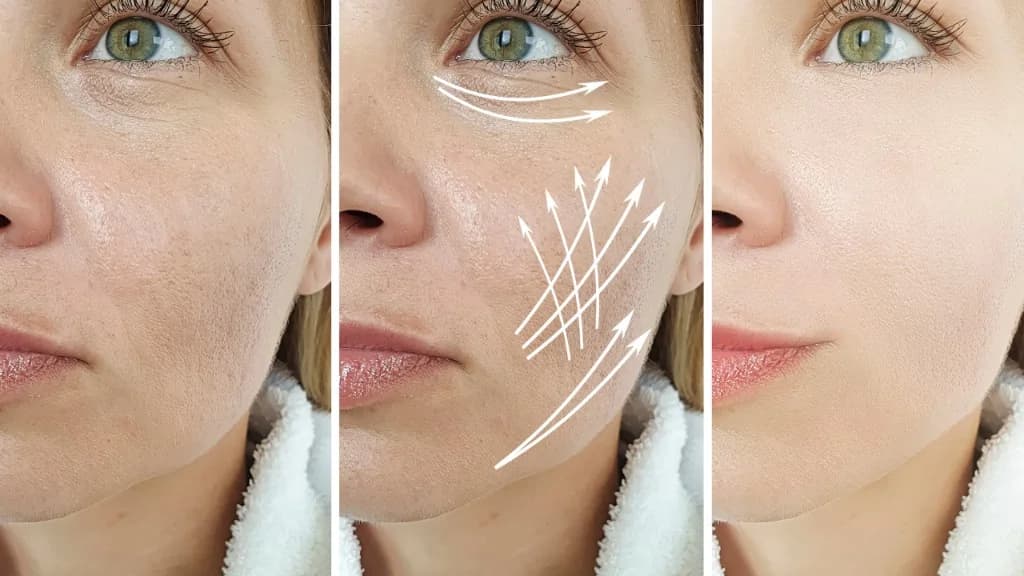
It may not lift skin mechanically, fill hollows like filler or replace professional treatment for medical skin conditions.
Does Face Yoga Really Work?
Research is growing but still limited. A small 2018 study in JAMA Dermatology reported that some participants who followed a facial exercise program for about 20 weeks perceived modest changes in mid- and lower-face fullness. The trial was exploratory—small sample, no control group—so findings should not be read as proof that everyone will look younger.
A 2014 systematic review in Aesthetic Surgery Journal examined earlier facial exercise studies and concluded evidence was insufficient to confirm rejuvenation benefits, partly because many reports lacked controls and used subjective ratings. More recent systematic reviews of conservative mechanical techniques note heterogeneity and small studies; some show localized muscle or elasticity changes, yet robust randomized trials are still needed.
FaceYo shares these signals without exaggeration: face yoga may support awareness and habit, not guaranteed aesthetic transformation.
Face Yoga by Area
Jawline and lower face. Jawline face yoga focuses on posture and gentle activation along the mandible—not thrusting the chin or biting down hard. Realistic aims include awareness of clenching, not reshaping bone.
Cheeks. Controlled smiles or cheek lifts work best when the forehead and eyes stay soft. Avoid pulling the mouth into extreme shapes that crease the nasolabial area.
Eyes and under-eye region. The skin here is thin. Use clean hands, feather-light contact and movements that do not tug delicate tissue. If you have active irritation or a medical eye condition, ask a clinician before practicing.
Forehead and brows. Screen time often tightens this zone. Practice releasing the brows toward neutral rather than holding them raised.
Neck and double chin. Include the neck in almost every session. Long sessions targeting only one band of muscle can create imbalance. Combine neck work with shoulder drops and balanced head position.
Age-specific guides such as face yoga in your 30s and face yoga in your 40s describe how tempo and focus may shift over time—still without miracle claims.
A Five-Minute Beginner Routine
Try this simple sequence on clean skin with relaxed shoulders:
- One minute — breath and posture. Sit tall, soften the jaw, take five slow breaths.
- One minute — neck and shoulders. Roll shoulders back; glide the chin slightly forward and back without compression.
- One minute — jaw awareness. Place fingertips at the masseter; practice a gentle open-close without clicking or pain.
- One minute — cheeks. Lift cheeks slightly while keeping eyes soft; release completely between reps.
- One minute — eyes and forehead. Blink slowly; smooth the brows down from a neutral position—not forced frowning.
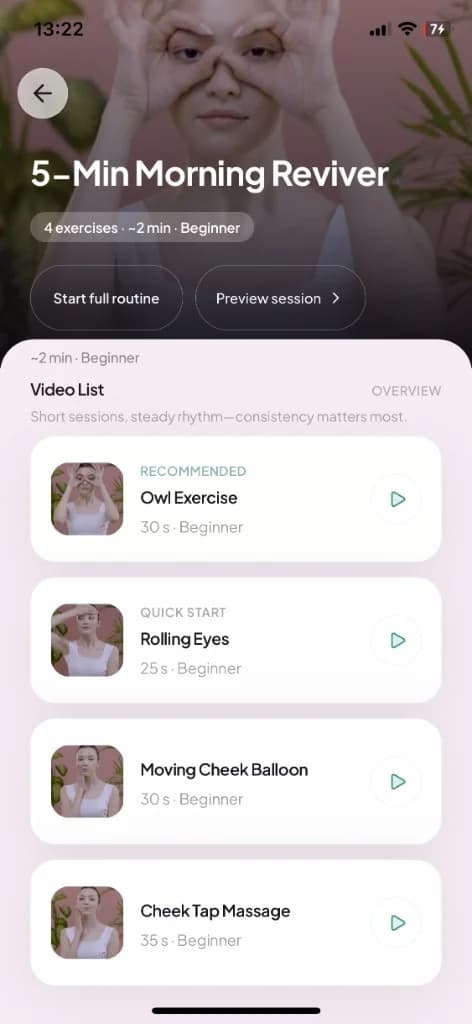
When you want guided pacing, open the five-minute routine in FaceYo rather than rushing through unfamiliar moves.
Daily Practice: Morning, Evening or Both?
Consistency beats intensity. Morning face yoga can mark a calm start; evening face yoga may help you notice tension from the day. Many people practice three to five days per week at first, then adjust. There is no single perfect clock—choose a time you can repeat calmly.
Supportive habits matter too. A water reminder nudges hydration within general wellness limits; a UV tracker offers contextual sun-awareness—it does not replace sunscreen.
Face Yoga and Skin Care
Wash hands before touching the face. Apply exercises on clean skin or after lightweight products, avoiding aggressive rubbing over active breakouts or broken barrier. Face yoga does not replace cleanser, moisturizer, retinoids where prescribed or broad-spectrum SPF.
If you enjoy appearance-focused self-improvement, read looksmaxxing and balanced face care for a calmer frame—movement and skincare as habits, not risky shortcuts.
Common Mistakes
- Pulling or pinching the skin to “smooth” lines
- Clenching the jaw all day outside practice
- Continuing through pain, clicking joints or headache
- Expecting visible transformation in a few days
- Replacing medical or dental advice for TMJ symptoms
Building a Sustainable Habit
Anchor face yoga to an existing ritual—after brushing teeth or before skincare at night. Track short streaks rather than marathon sessions. If you miss days, restart gently instead of doubling intensity.
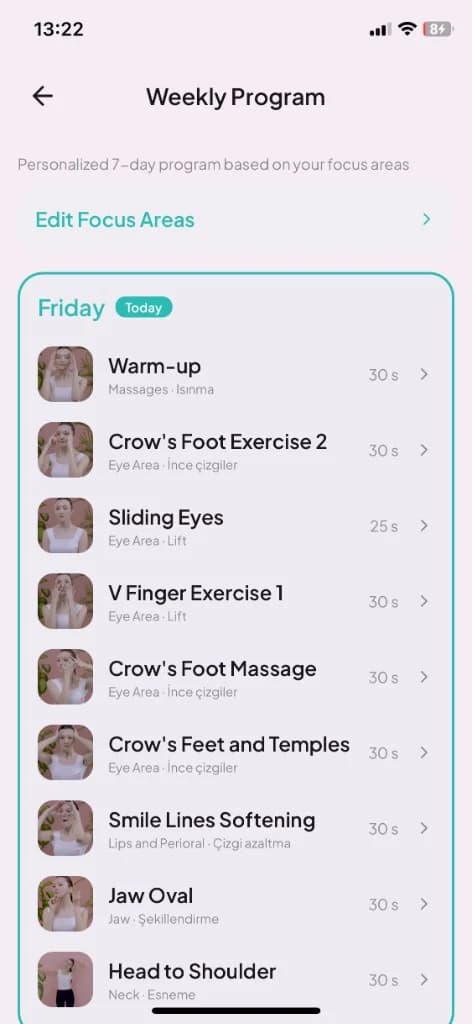
FaceYo helps with ordered video lessons, area-focused programs, optional hydration and UV context, and the same five-minute face yoga entry point many beginners prefer. No outcome is guaranteed; the app is educational and wellness-oriented.
Closing Thought
Face yoga is best understood as long-term mindful movement: aware muscles, steady habits and realistic expectations woven into how you already care for skin and posture. If something hurts, pause and seek professional guidance when needed.