Science · Skin
Skin elasticity
We read elasticity, aging changes and face yoga's limited place—without miracle claims.
Expert-informed face yoga programs.
Follow guided video exercises for different face areas at your own pace.
FaceYo content is designed to support your daily face yoga and personal care routine. If you have a specific health condition, you may wish to consult your specialist before using the app.
What is elasticity
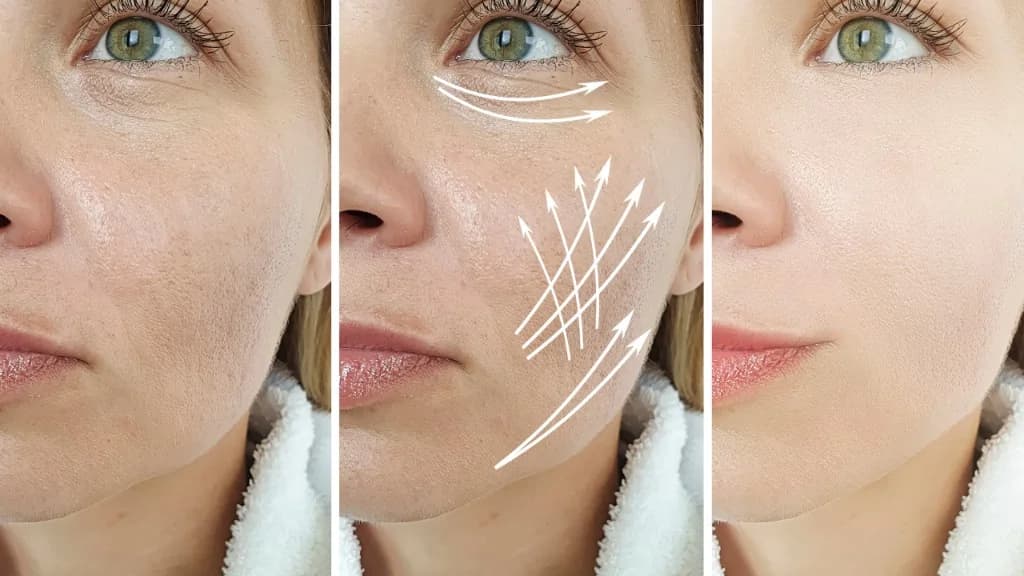
Skin elasticity is the capacity to stretch and return to shape. Collagen and elastin networks form the foundation. Farage's review explains gradual network changes may occur with age.
Perceived elasticity should be read with moisture, barrier and tissue support. Face Yo does not present elasticity as medical treatment.
How skin changes with age
Aging skin may show epidermal thinning and elastin organization changes. The process is not linear; genetics and UV affect pace.
Facial aging and photoaging offer broader context.
Influencing factors
UV, smoking, sleep, stress and nutrition may affect perceived elasticity. Sun protection and healthy habits may be supportive.
JAMA 2018 reported modest perceived fullness—not elasticity proof. Limits on research.
Face yoga context
Face yoga offers muscle awareness and gentle movement ritual. 'More alive' feeling is subjective—not elasticity restoration proof.
Facial muscles and cheeks offer regional ideas.
Caring expectations
Moisturizer, sun protection and gentle face yoga may be considered together—not medical treatment. Sudden changes warrant dermatologist advice.
Face Yo offers video-guided routines; we do not use 'firming guarantee' language.
Face Yo approaches this topic as daily wellness practice; individual experiences may differ. Gentle pacing, controlled breathing and moving without straining the face are core principles.
Our content draws on peer-reviewed sources but does not replace medical advice. Stop if you feel discomfort and consult a professional when needed.
Regular short sessions may be more sustainable than intense infrequent practice. The Face Yo app helps you choose personal pacing and focus areas.
Our science pages do not list in-app exercises one-to-one; they provide conceptual framing. Use guided videos in the Face Yo app for practice.
Outcomes should be considered alongside personal skincare, sleep, sun exposure and general health habits. Face yoga alone is not a skin treatment.
What science says
Sources and evidence summary
Characteristics of the Aging Skin
Key finding: Aging skin shows gradual changes in elasticity, moisture barrier and structural support.
Limitations: Focuses on skin biology; does not directly test facial exercise interventions.
Association of Facial Exercise With the Appearance of Aging
Key finding: After a 20-week facial exercise program, some participants reported modest improvements in perceived facial fullness.
Limitations: Very small sample, no control group, self-selected participants; results are not generalizable.
Start your face yoga ritual
Discover personalized, guided routines in the Face Yo app.
Selected lessons in EnglishSelected guided videos include English voiceover and subtitles in the app.
Frequently asked questions
Does face yoga increase elasticity?
Is elasticity loss normal?
Which products may help?
Are collagen supplements needed?
When see a dermatologist?
Related pages?
Face Yo
Science-informed face yoga without exaggerated claims
Face Yo does not present face yoga as a medical solution. Content is built around facial muscles, expression awareness, gentle movement and consistent practice principles, with a focus on safe daily self-care.
Explore the Science-Informed ApproachA daily routine that supports your natural beauty.
Make face yoga a natural part of your everyday self-care ritual.